Wall Street’s Takeaways From Kevin Warsh’s Testimony in Congress

Federal Reserve independence and revamping how the central bank gauges inflation were some of the topics discussed at the confirmation hearing for Trump’s Fed chair nominee.
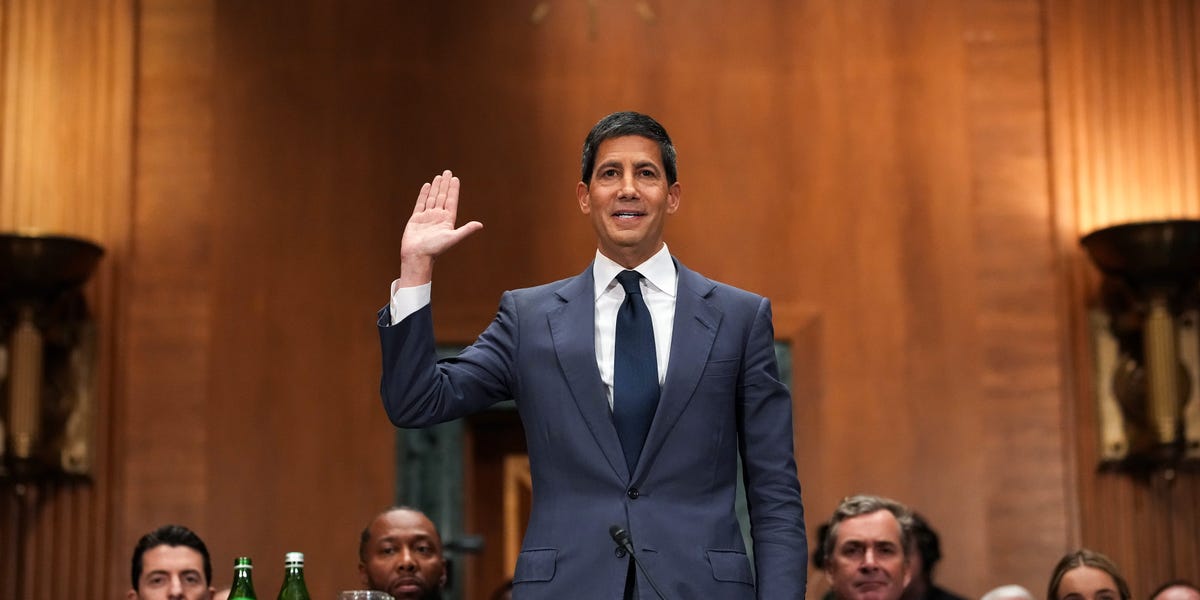
Kevin Warsh, a former Fed governor, testified to the Senate Banking Committee on Tuesday. The testimony offered investors insights into what the Fed could look like under Warsh’s leadership.
Here are some of Wall Street’s key takeaways from the hearing.
No sign of rate cuts ahead
Bank of America kicked off its analysis of Warsh’s testimony with what they didn’t hear: a justification for rate cuts.
“The most noteworthy aspect of Warsh’s testimony was the absence of a case for near-term cuts. Perhaps this was intentional, to signal his political independence,” the note read.
On the Fed’s dual mandate, maximum employment and stable prices, Warsh didn’t argue that inflation is on target, though he did say that the labor market was around full employment.
“In our view, Warsh’s stated outlook is much more consistent with an extended hold than additional cuts,” Bank of America said.
Trump has made it clear he wants the Fed to lower interest rates, voicing his criticisms of Powell for not cutting rates sooner, which has raised concerns about Fed independence.
Goldman Sachs flagged Warsh’s comments stating that he’s not “pre-committed to any policy decision” as part of its post-hearing recap.
Warsh’s “ironic” preferred inflation measure
The former Fed governor signaled he prefers trimmed-mean and median inflation over core personal consumption (PCE), the Fed’s current preferred measure of inflation.
“Omitting food and energy from the core is an arbitrary choice, whereas the trimmed mean and median are agnostic on what they exclude,” Bank of America explained.
The analysts said that this preference is reasonable, but ironic given that this figure will be more susceptible to one-off supply-driven price increases, like tariffs, which Warsh argued the Fed should look through.
They said it could also back Warsh into a corner in cases when trimmed-mean and median inflation outpace core PCE to protect Fed credibility and “avoid optics of cherry picking.”
They noted that inflation based on Warsh’s preferred measures is slightly lower than core PCE but still above the Fed’s target inflation rate of 2%.
The biggest change in switching the preferred inflation measure would be that energy and food shocks could be more important for Fed policy. Both energy and food inflation have emerged as an impact of the Iran war.
The hawk and the dove on Warsh’s shoulders
Warsh’s hawkish tone may have surprised investors, given that the expectation was for him to largely fall in line with Trump’s desire for looser monetary policy.
He was considered to be an inflation hawk during his tenure as Fed governor from 2006 to 2011, but Trump’s intense criticism of the central bank led many to expect Warsh to pivot.
Warsh said that the central bank’s post-pandemic policy errors led to increased price pressures above the Fed’s target.
This “positions him as an inflation fighter who isn’t afraid to tighten financial conditions,” Interactive Brokers senior economist José Torres said.
What’s next: a vote
Warsh will need to achieve a majority vote to be confirmed as the next Fed chair, but first, he has to make it through the Senate Banking Committee.
The committee, which is made up of 13 Republicans and 11 Democrats, must decide that the candidate is favorable through a majority vote before sending the nominee to the full Senate for a final vote.
The obstacle in Warsh’s path to leading the Fed is the Trump administration’s criminal investigation into current Fed Chair Jerome Powell.
Senator Thom Tillis, a Republican Senator from North Carolina and member of the Senate Banking Committee, reiterated during the hearing that he will oppose the confirmation until the investigation into Powell is resolved, which would leave the committee vote tied.
A tied vote means that the Senate can only confirm Warsh with a supermajority of 60 votes, rather than a simple majority of 51 votes. The Senate is composed of 53 Republicans, 2 independents, and 45 Democrats.